Understanding Creosote: The Hidden Danger in Your Chimney
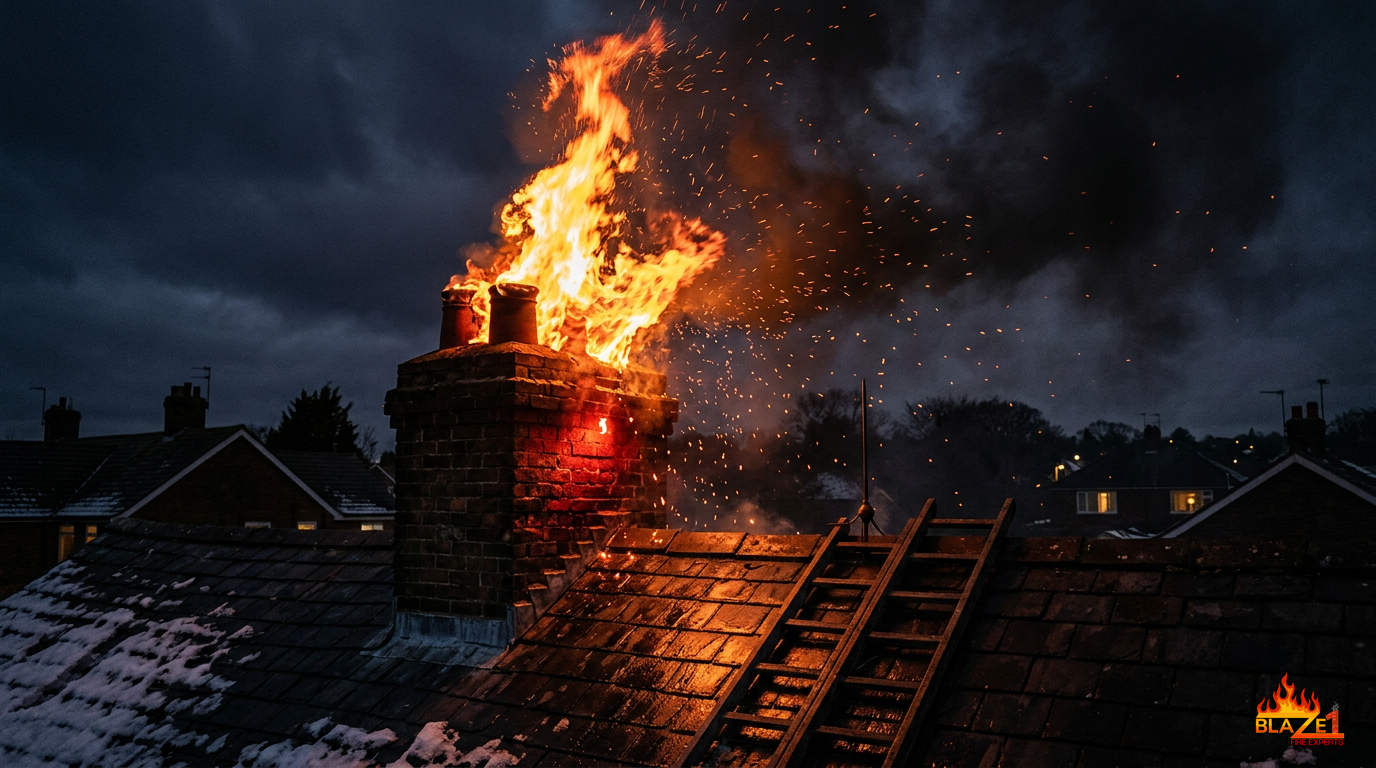
You can't always see it, smell it, or detect it without the right tools — but creosote is quietly building up inside your chimney every time you light a fire. And if left unchecked, it can turn a cozy evening into a catastrophic chimney fire.
What Is Creosote, and Why Should You Be Concerned?
Creosote is a dark, tar-like byproduct that forms when wood smoke rises through your chimney and cools before fully exiting. As the smoke makes contact with the cooler walls of your flue liner, unburned gases, moisture, and carbon particles condense and stick — layer by layer, season by season.
It comes in three stages. Stage one is a light, flaky residue that's relatively easy to brush away. Stage two is a thicker, tar-like coating that requires more aggressive removal. Stage three — the most dangerous — is a hard, glazed deposit that bonds to the flue liner like lacquer and is extremely difficult to remove without professional-grade tools.
The real danger? Creosote ignites at temperatures as low as 451°F. A chimney fire fueled by heavy creosote buildup can burn at over 2,000°F — hot enough to crack your flue liner, warp your damper, and spread fire into the walls of your home. The National Fire Protection Association consistently identifies creosote as one of the leading causes of residential chimney fires in the U.S.
Schedule a fireplace and chimney Inspection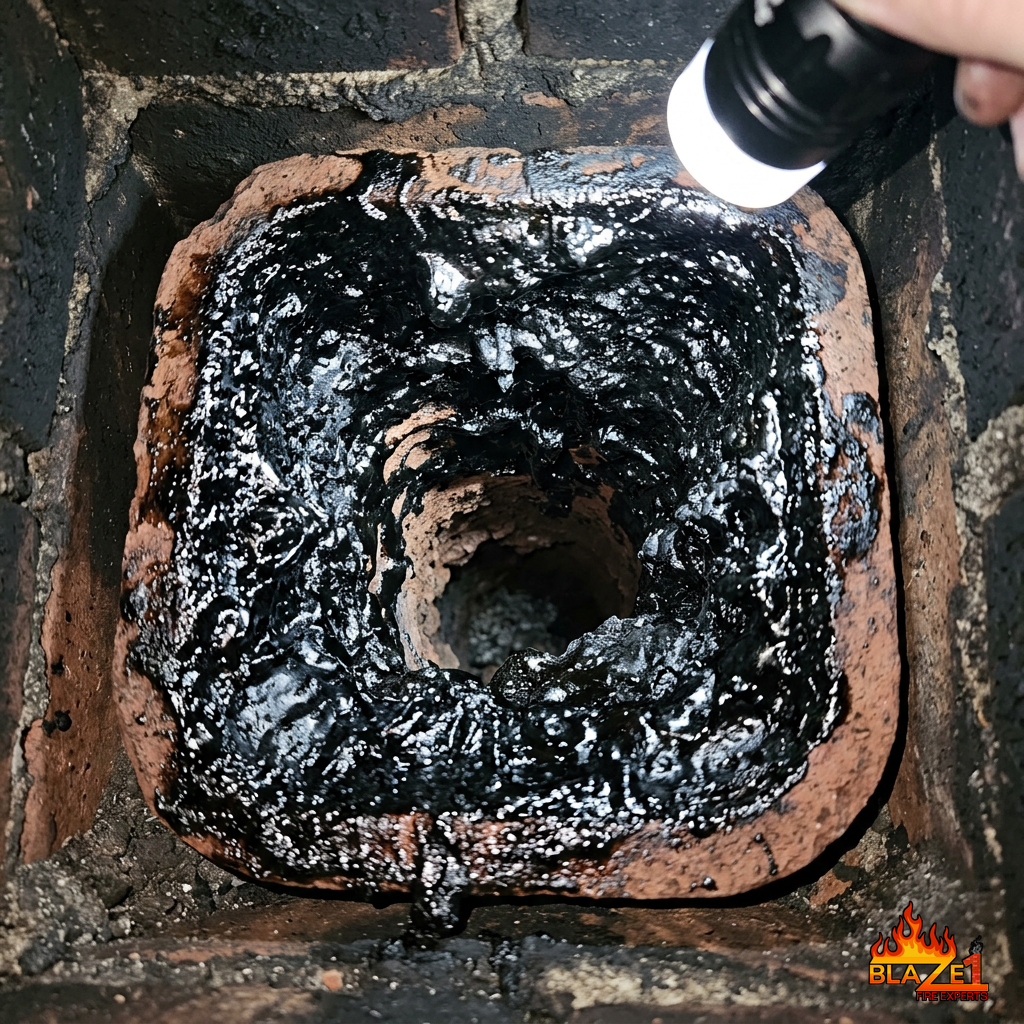
How Creosote Forms — and What Makes It Worse
In Denton, where many homeowners rely on wood-burning fireplaces during the occasional hard freeze, these short-burst burn habits are especially common — and especially conducive to rapid creosote accumulation.
Creosote doesn't discriminate, but some habits accelerate its buildup significantly:
Schedule Chimney Inspection
Why Annual Professional Removal Is Non-Negotiable
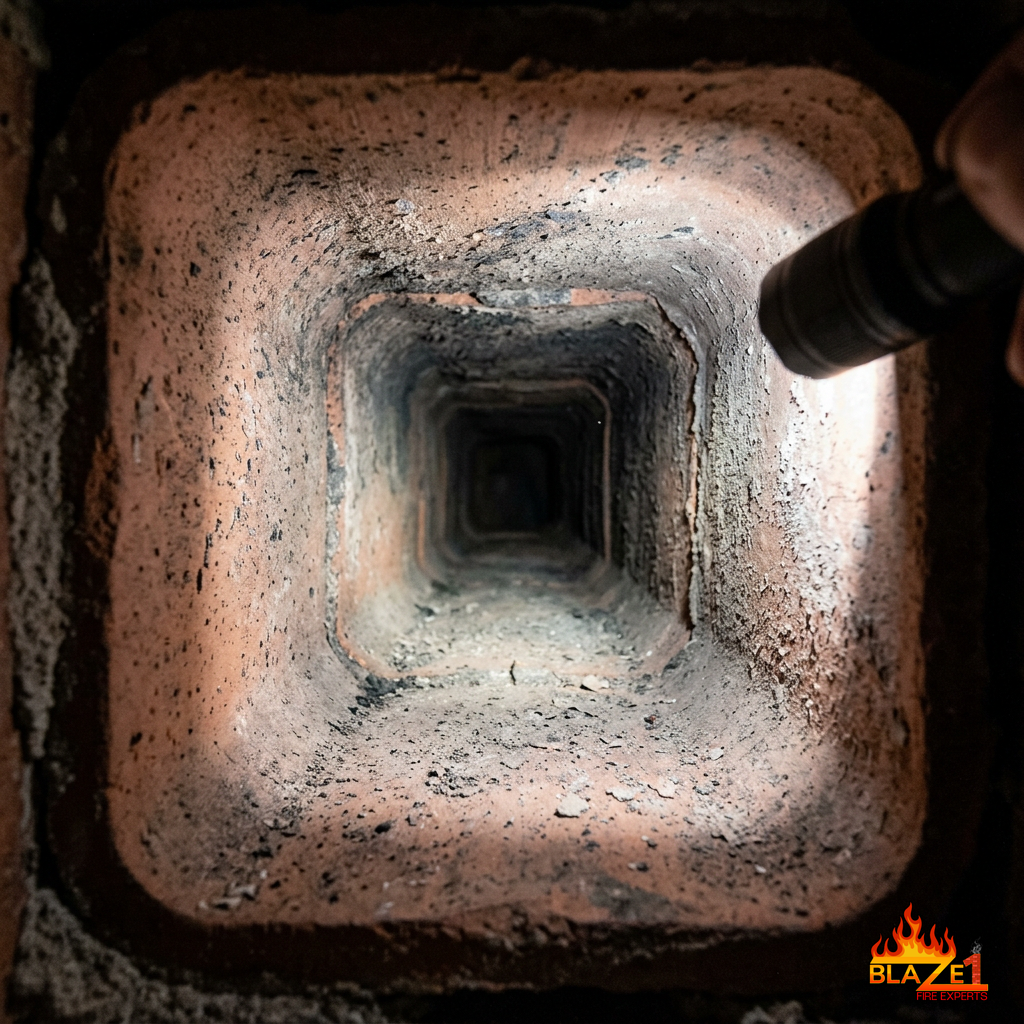
Many homeowners assume that if the fireplace is drawing smoke properly, everything is fine. It isn't. Creosote can be present in hazardous quantities even when your fireplace appears to be functioning normally.
A certified chimney sweep does far more than brush out soot. They assess the stage of buildup, identify liner damage caused by heat stress, inspect the smoke chamber and throat area, and use rotary tools or chemical treatments for stage two and three deposits that standard brushing cannot remove.
In Fort Worth, where older masonry fireplaces are common in established neighborhoods, stage two and three deposits are a frequent finding — especially in homes where fireplace use has ramped up without a professional cleaning in multiple seasons.
Signs that creosote buildup may already be a problem in your home:
Book an Inspection